Science
Science Curriculum Overview
Intent
At Moreland Primary School, our science curriculum aims to:
-
Foster a sense of excitement and curiosity about the world.
-
Ensure full coverage of the National Curriculum across biology, chemistry, and physics, including:
-
Biology: plants, animals (including humans), living things and their habitats, and evolution.
-
Chemistry: materials and their properties, changes of state, and reversible/irreversible changes.
-
Physics: forces, electricity, light, sound, Earth and space, and seasonal change.
-
-
Promote a deep understanding of scientific enquiry skills, including observation, pattern seeking, testing, research, and recording results.
-
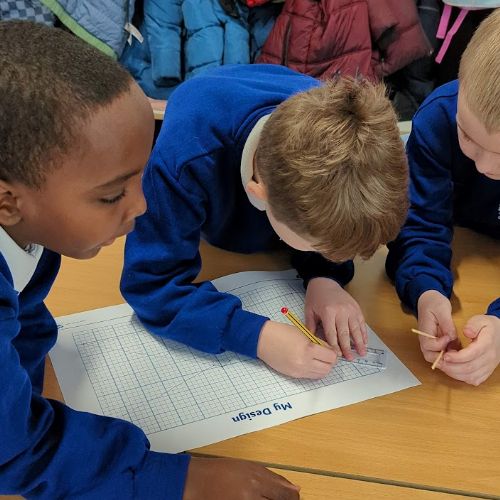
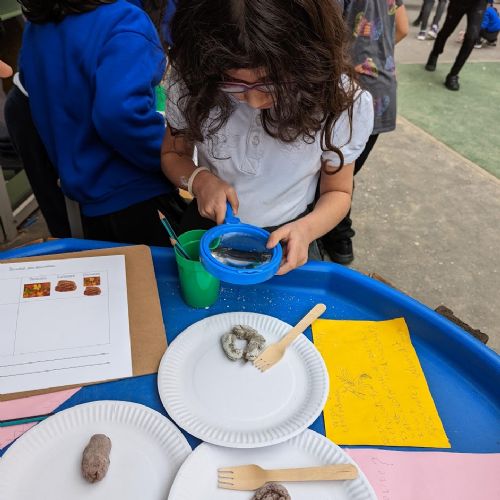
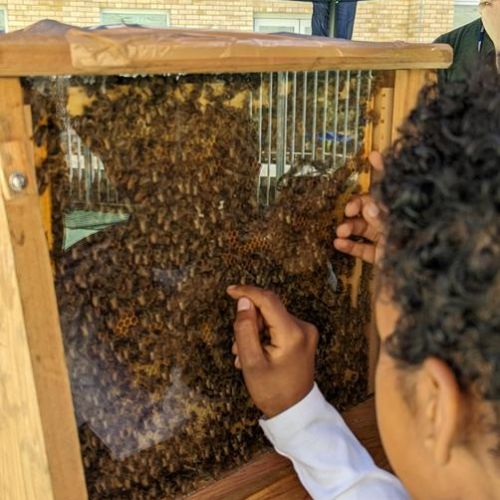
Develop children's understanding of scientific concepts and processes through hands-on experiences.
-
Encourage pupils to ask questions, make predictions, and conduct investigations to deepen their knowledge.
-
Develop a comprehensive scientific vocabulary.
-
Introduce pupils to influential individuals who have contributed to scientific knowledge—past and present—with a focus on diverse role models from different ethnicities, genders, and cultural backgrounds and those with disabilities.
-
Provide insights into STEM careers and real-world scientific applications.
-
Build cultural capital by offering rich scientific experiences beyond the classroom and developing pupils’ aspirations toward STEM careers.
-
Enhance science learning with literacy by linking reading materials to scientific topics.
We utilise the CUSP Science scheme of work to ensure a structured and comprehensive approach to science education across Years 1–6.
Implementation
Our science curriculum is delivered through:
- Understanding of the World in the EYFS and The Cusp Curriculum in Y1-Y6.
-
Science is taught weekly as a discrete subject, ensuring progression through key concepts and enquiry types across all year groups.
-
Lessons follow a sequence of learning that builds knowledge systematically and revisits key ideas to support retention and understanding.
-
Pupils regularly engage in practical investigations, developing skills in prediction, measurement, analysis, and evaluation.
-
Scientific vocabulary is explicitly taught and reinforced to support accurate and confident communication.
-
Each unit of study includes exploration of relevant scientists and innovators, including significant scientific figures from the past and contemporary scientists from diverse backgrounds.
-
Cultural capital is nurtured through:
-
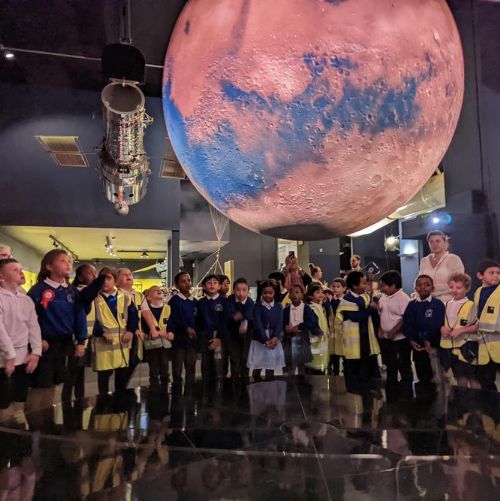
Educational visits to science museums such as the Science Museum and Natural History Museum.
-
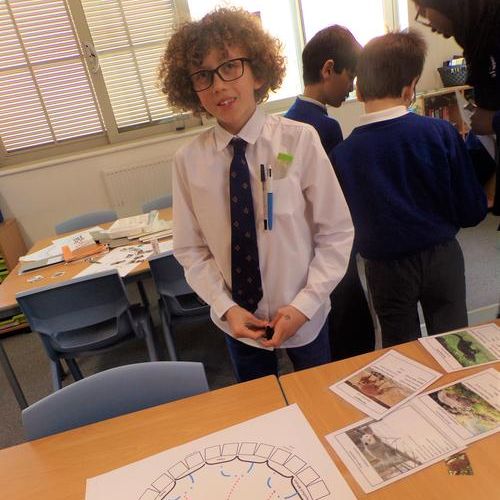
Participation in British Science Week, including workshops, themed investigations, and science fairs.
-
Attendance at science events and exhibitions to engage pupils in real-world scientific discovery.
-
Meeting real scientists and engineers through outreach programmes, assemblies, and Q&A sessions.
-
-
Pupils explore the relevance of science in everyday life and its role in society, the environment, and future technologies.
-
Regular links are made between classroom learning and STEM careers, highlighting how scientific understanding underpins jobs in medicine, engineering, environmental science, and more.
This multifaceted approach ensures that students not only grasp scientific knowledge but also appreciate its relevance in the wider world.
Impact
The impact of our Science curriculum is seen in:
-
Enhanced Scientific Understanding:
-
Students demonstrate a solid grasp of scientific principles and vocabulary.
-
Pupils develop strong subject knowledge across biology, chemistry, and physics, aligned with the National Curriculum.
-
Children achieving attainment targets in Science.
-
-
Improved Enquiry Skills:
-
Pupils effectively plan and conduct investigations, analysing and interpreting data.
-
Confident, curious learners who ask questions, seek answers, and think critically about the world
-
-
Increased Engagement:
-
Greater engagement in science through hands-on investigations and meaningful, real-world links.
-
Children show enthusiasm for science through active participation in lessons and extracurricular activities.
-
-
Broadened Horizons:
-
Enhanced cultural capital and raised aspirations through visits, events, and direct exposure to science in action.
-
Pupils inspired by a diverse range of scientists and innovators, broadening their horizons and aspirations.
-
A firm foundation for success in secondary science and interest in future STEM pathways.
-
Through these outcomes, students at Moreland Primary School develop into inquisitive, knowledgeable, and confident learners, well-prepared for the scientific challenges of the future.
Science at Moreland
In the EYFS Science is covered in the ‘Understanding the World’ area of the EYFS Curriculum. It is introduced indirectly through activities that encourage every child to explore, problem solve, observe, predict, think, make decisions and talk about the world around them. During their first years at school, our children will explore creatures, people, plants and objects in their natural environments. They will observe and manipulate objects and materials to identify differences and similarities. They will also learn to use their senses, noticing and describing what they see, feel, smell, touch and taste. They will make observations of animals and plants and explain why some things occur and talk about changes. Children will be encouraged to ask questions about why things happen and how things work. Children will also be asked questions about what they think will happen to help them communicate, plan, investigate, record and evaluate findings.
In Years 1-6 we teach Science topics using the Cusp Science scheme of work. This allows children to be fully immersed in their scientific enquiry and learning and develop a sense of excitement and curiosity about Science. Science lessons are practical, allowing children to work and think scientifically and children participate in experiments and investigations, answering scientific questions as part of the curriculum. Children are taught essential aspects of the knowledge, methods, processes and uses of science. Through building up a body of key foundational knowledge and concepts.
Reading lessons, during Science blocks, are also linked to Science topics, allowing children to extend their background scientific knowledge, learn about the history of scientific discovery, new scientific discoveries and applications, key figures in Science and reinforce new scientific vocabulary. Children are given opportunities to write up science experiments and scientific reports.
There are many enrichment opportunities linked to the Science Curriculum including visits to places such as The Science Museum, The Garden Classroom, The Natural History Museum, London Zoo, City Farms, Highgate Woods and The Royal Observatory. Children also take part in science-based workshops in school and share their scientific learning through a Science Fair to celebrate British Science Week. We provide children with insight into careers in STEM subjects through Dream Catcher Assemblies and links with organisations such as Inmarsat, City University, The British Antarctic Survey and 3 Discovery.